Advertising & Campaigns
Abercrombie & Fitch
Developed a conceptual brand relaunch for Abercrombie & Fitch, spanning campaign strategy, print and billboard advertising, social content, and a pop-up store concept.
Year :
2023
Industry :
Retail
Client :
Abercrombie & Fitch
Project Duration :
2 weeks

Problem :
Abercrombie & Fitch's legacy is built on decades of exclusion — a brand identity that deliberately celebrated young, thin, and fair-skinned bodies while sidelining everyone else. Despite years of industry-wide conversations around inclusivity, the brand's cultural reputation remained tied to this narrow, exclusionary image, leaving a gap between its historical identity and the diverse audiences retail brands are now expected to represent.
The challenge was to imagine what a genuine reckoning with that legacy could look like — not a soft, symbolic gesture, but a campaign bold enough to directly confront and reverse the very standards the brand once stood for.
Solution :
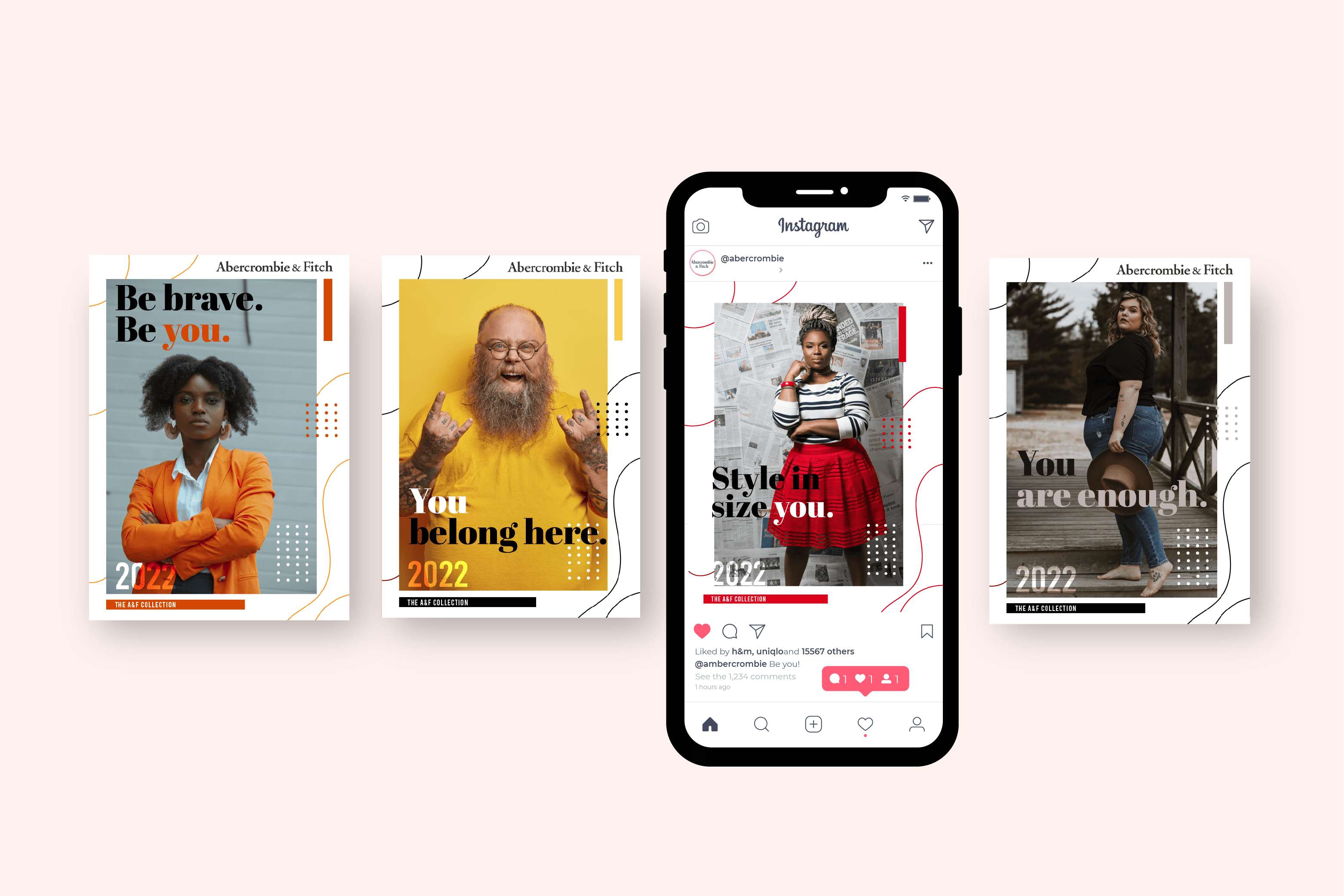
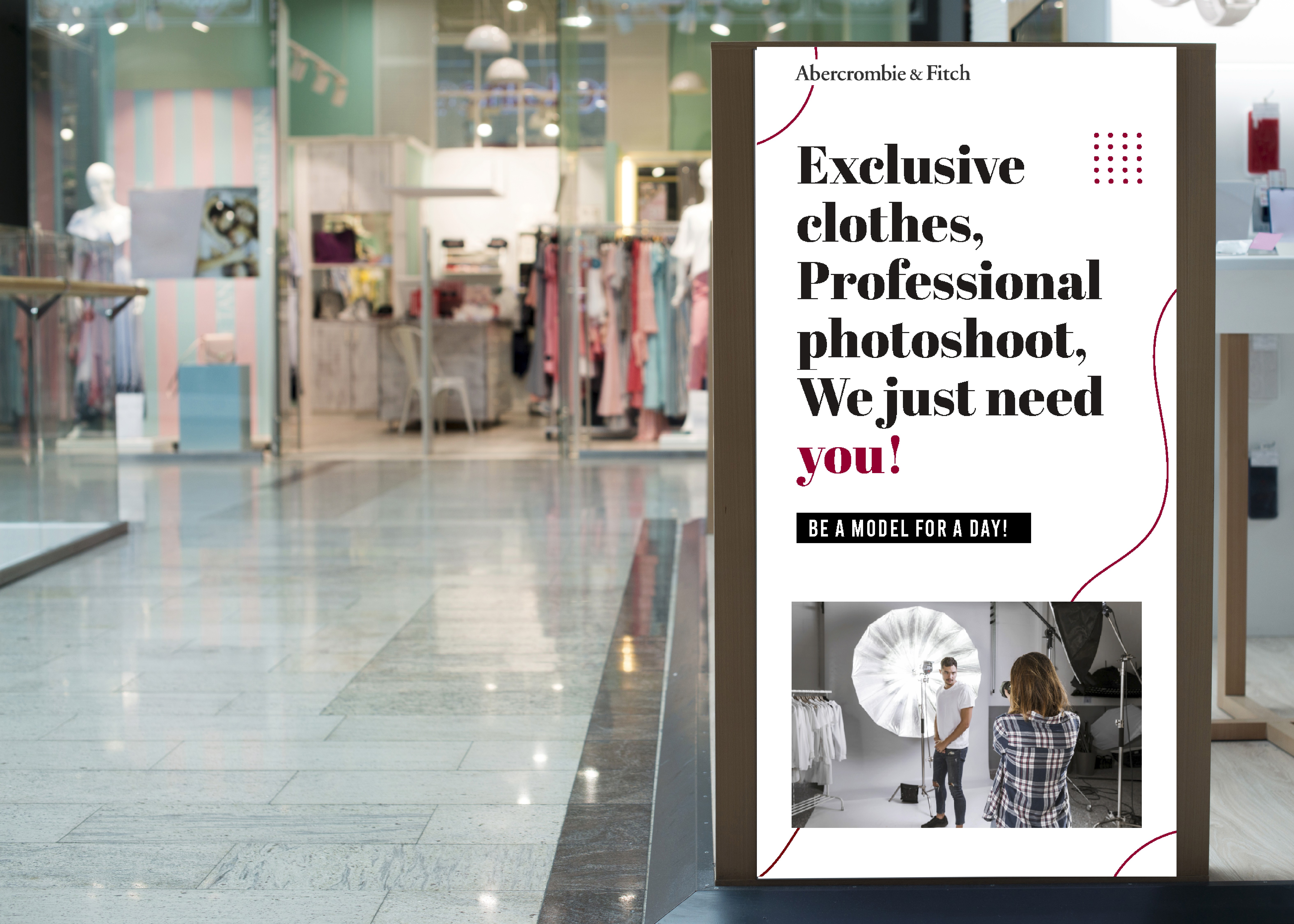
The response was a conceptual brand relaunch that deliberately inverts A&F's original casting philosophy — choosing older, plus-size, and dark-skinned models as the face of the campaign, rather than treating them as an afterthought or diversity checkbox. Every deliverable, from the campaign strategy deck to billboards, print posters, Instagram content, and a pop-up store concept with accompanying video, was built around this single, unapologetic idea.
Each casting choice and image was treated as a statement in itself — a direct challenge to the industry's narrow definition of beauty, communicated consistently across every format and touchpoint of the campaign.


Challenge :
The core challenge was creating a campaign provocative enough to make its point unmistakably clear, without tipping into gimmick or performative messaging. Every visual and strategic decision had to feel intentional and earned — reinforcing a genuine reckoning with the brand's past rather than a surface-level rebrand.
Translating one bold conceptual idea across such varied formats — from a strategic deck to billboards to short-form video — while keeping the message sharp, consistent and provocative at every scale added another layer of complexity to the execution.
Summary :
This project reimagines Abercrombie & Fitch not as a soft rebrand, but as a reckoning — deliberately rejecting the brand's exclusionary legacy by centering the people it once ignored. Through bold casting, provocative imagery, and a fully realised campaign system spanning print, digital, and experiential formats, the concept demonstrates how design and strategy can be used to directly confront a brand's past rather than quietly move on from it.
It stands as an example of how conceptual, strategy-led design can drive a message that's both commercially bold and culturally meaningful.

More Projects


Advertising & Campaigns
Abercrombie & Fitch
Developed a conceptual brand relaunch for Abercrombie & Fitch, spanning campaign strategy, print and billboard advertising, social content, and a pop-up store concept.
Year :
2023
Industry :
Retail
Client :
Abercrombie & Fitch
Project Duration :
2 weeks
Problem :
Abercrombie & Fitch's legacy is built on decades of exclusion — a brand identity that deliberately celebrated young, thin, and fair-skinned bodies while sidelining everyone else. Despite years of industry-wide conversations around inclusivity, the brand's cultural reputation remained tied to this narrow, exclusionary image, leaving a gap between its historical identity and the diverse audiences retail brands are now expected to represent.
The challenge was to imagine what a genuine reckoning with that legacy could look like — not a soft, symbolic gesture, but a campaign bold enough to directly confront and reverse the very standards the brand once stood for.
Solution :
The response was a conceptual brand relaunch that deliberately inverts A&F's original casting philosophy — choosing older, plus-size, and dark-skinned models as the face of the campaign, rather than treating them as an afterthought or diversity checkbox. Every deliverable, from the campaign strategy deck to billboards, print posters, Instagram content, and a pop-up store concept with accompanying video, was built around this single, unapologetic idea.
Each casting choice and image was treated as a statement in itself — a direct challenge to the industry's narrow definition of beauty, communicated consistently across every format and touchpoint of the campaign.
Challenge :
The core challenge was creating a campaign provocative enough to make its point unmistakably clear, without tipping into gimmick or performative messaging. Every visual and strategic decision had to feel intentional and earned — reinforcing a genuine reckoning with the brand's past rather than a surface-level rebrand.
Translating one bold conceptual idea across such varied formats — from a strategic deck to billboards to short-form video — while keeping the message sharp, consistent and provocative at every scale added another layer of complexity to the execution.
Summary :
This project reimagines Abercrombie & Fitch not as a soft rebrand, but as a reckoning — deliberately rejecting the brand's exclusionary legacy by centering the people it once ignored. Through bold casting, provocative imagery, and a fully realised campaign system spanning print, digital, and experiential formats, the concept demonstrates how design and strategy can be used to directly confront a brand's past rather than quietly move on from it.
It stands as an example of how conceptual, strategy-led design can drive a message that's both commercially bold and culturally meaningful.
More Projects
Advertising & Campaigns
Abercrombie & Fitch
Developed a conceptual brand relaunch for Abercrombie & Fitch, spanning campaign strategy, print and billboard advertising, social content, and a pop-up store concept.
Year :
2023
Industry :
Retail
Client :
Abercrombie & Fitch
Project Duration :
2 weeks
Problem :
Abercrombie & Fitch's legacy is built on decades of exclusion — a brand identity that deliberately celebrated young, thin, and fair-skinned bodies while sidelining everyone else. Despite years of industry-wide conversations around inclusivity, the brand's cultural reputation remained tied to this narrow, exclusionary image, leaving a gap between its historical identity and the diverse audiences retail brands are now expected to represent.
The challenge was to imagine what a genuine reckoning with that legacy could look like — not a soft, symbolic gesture, but a campaign bold enough to directly confront and reverse the very standards the brand once stood for.
Solution :
The response was a conceptual brand relaunch that deliberately inverts A&F's original casting philosophy — choosing older, plus-size, and dark-skinned models as the face of the campaign, rather than treating them as an afterthought or diversity checkbox. Every deliverable, from the campaign strategy deck to billboards, print posters, Instagram content, and a pop-up store concept with accompanying video, was built around this single, unapologetic idea.
Each casting choice and image was treated as a statement in itself — a direct challenge to the industry's narrow definition of beauty, communicated consistently across every format and touchpoint of the campaign.
Challenge :
The core challenge was creating a campaign provocative enough to make its point unmistakably clear, without tipping into gimmick or performative messaging. Every visual and strategic decision had to feel intentional and earned — reinforcing a genuine reckoning with the brand's past rather than a surface-level rebrand.
Translating one bold conceptual idea across such varied formats — from a strategic deck to billboards to short-form video — while keeping the message sharp, consistent and provocative at every scale added another layer of complexity to the execution.
Summary :
This project reimagines Abercrombie & Fitch not as a soft rebrand, but as a reckoning — deliberately rejecting the brand's exclusionary legacy by centering the people it once ignored. Through bold casting, provocative imagery, and a fully realised campaign system spanning print, digital, and experiential formats, the concept demonstrates how design and strategy can be used to directly confront a brand's past rather than quietly move on from it.
It stands as an example of how conceptual, strategy-led design can drive a message that's both commercially bold and culturally meaningful.